


ALLAH'S (SWT) COMMAND TO WITNESS AL-QIYAMAH (THE RESURRECTION)
I do call to witness the Resurrection Day; And I do call to witness the self-reproaching Spirit.(Qur'an 75:1-2)
The Baptism of God, and who is better than God to baptize? Him do we worship" (chap. ii). this is the translation from the Quran... The spiritual baptism is the direct work of God Himself. As a fuller or a laundress washes the linen or any other object with water; as a dyer tints the wool or cotton with a tincture to give it a new hue; and as a baptist blots out the past sins of the true penitent believer, so does God Almighty baptize, not the body, but the spirit and the soul of him whom He mercifully directs and guides unto the Holy Religion of Islam. This is the Sibghatu Allah the Baptism of Allah, which makes a person fit and dignified to become a citizen of the Kingdom of Allah and a member of His religion.
Encyclopaedia of Islam, Mufti M. Mukarram Ahmed, page 214
Surah 2:138 Al Baqarah (The Heifer)
The Baptism of Allah;And who can baptise better than Allah?
And it is He whom we worship.
surah 2:138 Al Baqarah (The Heifer)
The Baptism of Allah: An Esoteric Interpretation of Surah 2:138 and the Inner Resurrection
Table of Contents
- 1. Introduction: The Qur'anic Declaration of a Divine Baptism
- 2. The Linguistic and Theological Significance of Ṣibghat Allāh
- 3. The Prophetic Tradition of the Coccyx ('ajb al-dhanab) as the Seed of Resurrection
- 4. The Two Qiyamahs: Distinguishing Between Outer and Inner Resurrection
- 5. Qur'anic Evidence for Inner Resurrection
- 6. Sufi and Esoteric Interpretations of Spiritual Rebirth
- 7. Cross-Traditional Parallels: The Universal Mechanism of Spiritual Awakening
- 8. Al-Naba' (The Great News): The Dispute Over the Resurrection
- 9. Conclusion: The Baptism of Allah as the Missed Qiyamah
- 10. References
1. Introduction: The Qur'anic Declaration of a Divine Baptism
The Qur'an, in Surah Al-Baqarah, makes a profound and enigmatic declaration: The Baptism of Allah; and who can baptise better than Allah? And it is He whom we worship.
[1] This verse, centered on the term Ṣibghat Allāh, has been a subject of extensive theological discussion. While many mainstream interpretations view it metaphorically as the color
or religion
of God, a deeper, esoteric reading, supported by hadith, classical linguistic analysis, and cross-traditional spiritual teachings, points to a more direct, experiential, and transformative event: a spiritual resurrection that occurs within the living individual. This paper argues that the Baptism of Allah is not a symbolic adoption of faith but a literal, inner Qiyamah, an awakening of a divine potential located at the base of the spine, an event that many have overlooked in their expectation of a purely external, eschatological apocalypse.
2. The Linguistic and Theological Significance of Ṣibghat Allāh
The term ṣibghah (صِبْغَة) literally means dye
or color.
However, as classical Arabic lexicographers like Ibn Fāris and al-Rāghib al-Iṣfahānī note, the root ṣ-b-gh implies a transformative immersion that alters the very essence of the object being dyed.[2] It is not a superficial coating but a deep, permeating change. Thus, Ṣibghat Allāh is not merely the outward profession of Islam but an inward transformation of the human being, a spiritual dyeing
in the attributes of the Divine. This interpretation is further supported by the context of the verse, which contrasts Allah's baptism with the ritualistic baptisms of other traditions, suggesting a superior, direct, and unmediated divine action.
3. The Prophetic Tradition of the Coccyx ('ajb al-dhanab) as the Seed of Resurrection
Authentic hadith from both Sahih al-Bukhari and Sahih Muslim provide a crucial anatomical key to understanding this inner resurrection. The Prophet Muhammad (ﷺ) is reported to have said:
Everything of the human body will decay except the coccyx bone ('ajb al-dhanab) and from that bone Allah will reconstruct the whole body.[3]
This is a remarkable statement, identifying a specific, indestructible part of the human anatomy as the locus of resurrection. This is not an allegory but a precise spiritual and biological statement. The coccyx is presented as the seed from which creation is renewed. This concept finds parallels in other traditions, such as the Jewish concept of the Luz bone, an indestructible bone at the base of the spine from which the body will be resurrected.[4]
4. The Two Qiyamahs: Distinguishing Between Outer and Inner Resurrection
Islamic eschatology speaks of Al-Qiyamah, the Day of Resurrection, as a future event. However, the Qur'an and the esoteric traditions of Islam also speak of an inner, spiritual resurrection that can be experienced in this life. This is the distinction between the Qiyamah al-Kubra (the Great Resurrection) at the end of time and the Qiyamah al-Sughra (the lesser resurrection) of the individual soul. The provided materials from adishakti.org argue that many Muslims, in their focus on the external, apocalyptic Qiyamah, have missed the signs and the reality of the inner, spiritual Qiyamah.
5. Qur'anic Evidence for Inner Resurrection
The Qur'an itself contains verses that speak of a spiritual death and rebirth in this life. For example, in Surah Al-An'am, Allah asks:
Is one who was dead and We gave him life and made for him a light by which he walks among people like one who is in darkness from which he cannot exit?[5]
Classical commentators like Ibn Kathīr and al-Qurtubī interpret the dead
here as spiritually dead, and the life
as divine guidance and illumination in this world. This is a clear reference to an inner, spiritual resurrection. Similarly, Surah Al-Baqarah states, You were dead, and He gave you life.
[6] The past tense suggests a state of spiritual death that precedes a spiritual awakening in this life.
6. Sufi and Esoteric Interpretations of Spiritual Rebirth
The esoteric tradition of Islam, particularly Sufism, has long emphasized the concept of inner resurrection. The famous dictum of the Prophet, Die before you die,
is central to Sufi thought, referring to the annihilation of the ego (fanā') and subsistence in God (baqā'). Mystics like Rumi, Ibn 'Arabi, and al-Ghazali all spoke of this inner transformation. Ibn 'Arabi referred to a personal resurrection
(qiyāmah shakhsiyyah), while al-Ghazali spoke of the true life
that God casts into the servant's heart in this world.[7] This inner resurrection is the very essence of the spiritual path in Sufism.
7. Cross-Traditional Parallels: The Universal Mechanism of Spiritual Awakening
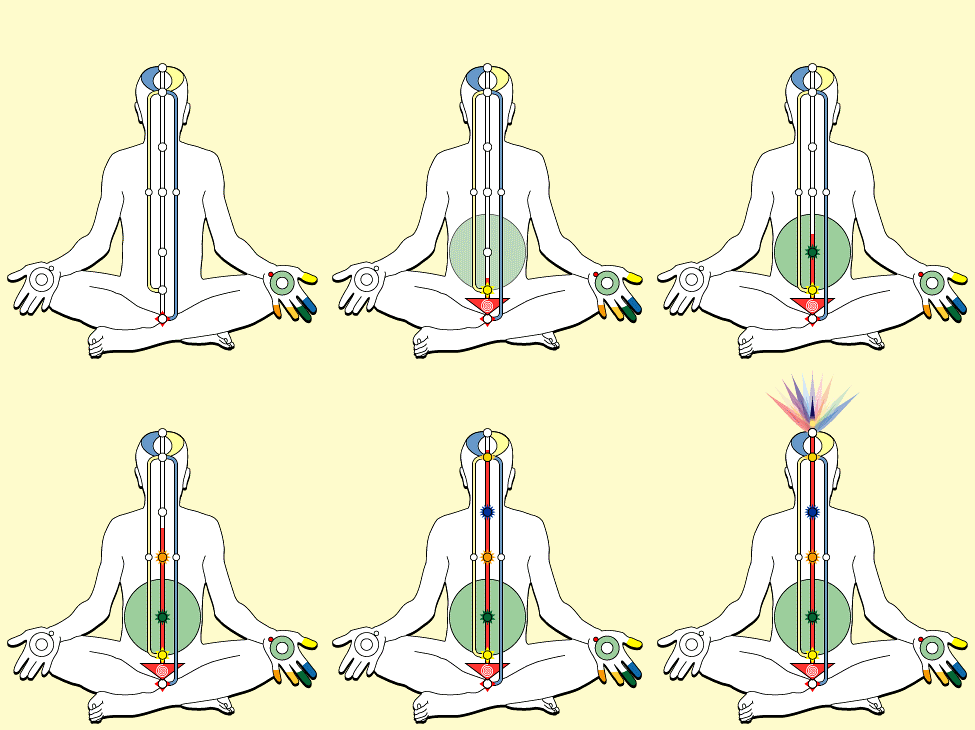
The concept of a spiritual energy residing at the base of the spine that, when awakened, leads to enlightenment is not unique to Islam. The Hindu tradition speaks of the Kundalini, a coiled energy at the base of the spine that, when awakened, rises through the subtle energy centers (chakras) to the crown of the head, resulting in self-realization. The Christian tradition speaks of being born again
of the Holy Spirit. The adishakti.org materials posit that these are all different names for the same universal mechanism of spiritual awakening, the very mechanism that is activated in the Baptism of Allah.
8. Al-Naba' (The Great News): The Dispute Over the Resurrection
Surah 78, Al-Naba' (The Great News), begins with a question: Concerning what are they disputing? Concerning the Great News, about which they are in disagreement.
[8] Abdullah Yusuf Ali, in his commentary, notes that the Great News
is usually understood to mean the Resurrection.[9] The fact that people are disputing
and in disagreement
about it suggests that the Resurrection is not a simple, universally accepted concept. The esoteric interpretation presented in the provided materials suggests that this dispute arises because the true nature of the Resurrection—as an inner, spiritual event—is misunderstood and rejected by many who are expecting a purely external phenomenon.
9. Conclusion: The Baptism of Allah as the Missed Qiyamah
The evidence from the Qur'an, hadith, linguistic analysis, and cross-traditional spiritual teachings converges to support an esoteric interpretation of Surah 2:138. The Baptism of Allah is not a mere metaphor for conversion but a direct, transformative, and experiential spiritual resurrection. It is the awakening of a divine potential, the Rūḥ or Spirit of God, located at the coccyx, the very seed of resurrection identified by the Prophet Muhammad (ﷺ). This inner Qiyamah, this spiritual rebirth, is the Great News
that many have disputed and missed, looking for signs in the external world while the true miracle unfolds within. The challenge posed by the verse, who can baptise better than Allah?
is a call to seek this direct, unmediated experience of the Divine, to move beyond ritual and dogma to the living reality of spiritual transformation.
10. References
[1] The Qur'an, Surah Al-Baqarah 2:138.
[2] As cited in the provided material, "The Baptism of Allah and the Missed Qiyāmah: A Scholarly Interfaith Interpretation."
[3] Sahih al-Bukhari 4814.
[4] As discussed in "Resurrection from the Coccyx – Divine Blueprint of Al-Qiyamah."
[5] The Qur'an, Surah Al-An'am 6:122.
[6] The Qur'an, Surah Al-Baqarah 2:28.
[7] As cited in the provided material, "The Baptism of Allah and the Missed Qiyāmah: A Scholarly Interfaith Interpretation."
[8] The Qur'an, Surah An-Naba' 78:1-3.
[9] Abdullah Yusuf Ali, The Holy Qur'an, Amana Corporation, 1989.
The Baptism of Allah and the Missed Qiyāmah
The Qur’anic term ṣibghah—literally: dyeing, colouring, infusion—denotes a qualitative immersion that alters the thing it colours. Classical Arabic lexical authorities (Ibn Fāris, al‑Rāghib, Ibn Manẓūr) treat the root ṣ‑b‑gh as implying an alteration of essence. In this verse Allah announces a transformation performed by God Himself rather than by human ritual.
2. The Prophetic Revelation: Resurrection Begins at the Coccyx
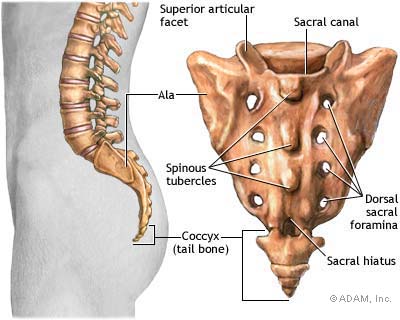
The Coccyx is the last bone in the vertebral column
"The Coccyx is the last bone in the vertebral column. It was mentioned in many Hadiths that this bone is the origin of humans and the seed from which they will be resurrected on the Day of Judgment and that this part doesn't decay in the earth.
The honoured Hadiths:
1. Abu Huraira reported that The Prophet (PBUH) said: All what of son of Adam will (be eaten) by the earth except the coccyx from which he was created and from which he will be resurrected Reported by Albukhari, Al Nassaii, Abu Daoud, Ibn Majah and Ahmad in his Mousnad and Malek in his Mouattaa.
2. As was reported by Abu Huraira the prophet (PBUH) said: There is a bone in the Son Of Adam that the earth will never eat. They said what is it Oh Prophet of Allah? He said: It is the coccyx Reported by Albukhari, Al Nassaii, Abu Daoud, Ibn Majah, Ahmad in his book al Mousnad and Malek in his book Al Mouattaa.
So the previous Hadiths are clear and contain the following facts:
1. Human are created from the coccyx.
2. The coccyx does not get decayed.
3. On the Day of Judgment, the Resurrection will be from the coccyx.”
Dr. Othman Aljilani, www.quranandscience.com
(Retrieved November 22, 2012)
Authenticated ḥadīth literature affirms that resurrection (al‑qiẓāmah / al‑qiyāmah) is linked to the ʿajb al‑dhanab (the tail‑bone / coccyx):
- Al‑Bukhārī records that all of creation will decay except the tailbone, from which humankind will be reassembled on the Day of Resurrection.[2]
- Muslim likewise transmits that every part of the son of Adam perishes except the last bone at the lower end of the spine (ʿajb al‑dhanab); from it he will be recreated.[3]
These narrations are classically graded strong and have significant theological import: the coccyx functions as the locus of re‑creation. When read alongside the Qur’an’s language of inner life and illumination, the hadith point to an ontological seed of resurrection embedded within human anatomy.
3. Inner Resurrection in the Qur’an: Life Before Death
The Qur’an presents resurrection in multiple dimensions. Beyond the post‑mortem reassembly of bodies, the text also describes a life restored in this world:
“Is one who was dead, and We gave him life, and made for him a light by which he walks among people…” — Qur’an 6:122
Exegetes such as Ibn Kathīr, al‑Qurṭubī, and al‑Ṭabarī interpret the term “dead” here as spiritual death; the “life” granted is a present‑tense illumination and ethical transformation. Similarly, Qur’an 2:28 (“You were dead and He gave you life”) reiterates that God’s enlivening is not confined to eschatological chronology but may occur in the living human.
4. The Baptism of Allah = Inner Resurrection (Qiyāmah al‑Bāṭinah)
Within classical and later Islamic spirituality (taṣawwuf), scholars such as al‑Ghazālī, Ibn ʿArabī, and Jalāl al‑Dīn Rūmī describe a transformation of the servant effected by God’s light and presence. The Qur’anic language of ṣibghah, of being made alive, and of receiving light coheres with this mystic anthropology: God alone baptizes the soul by infusing it with life and illumination.
When this divine infusion reaches the locus identified in the prophetic narrations—the coccyx—it effects an ascent of spiritual energy that purifies the inner channels, opens the higher centres, and manifests a living resurrection in the heart and consciousness of the seeker.
5. Why This Is the Qiyāmah Many Muslims Missed
The Qur’an contains repeated rebukes to those who fail to perceive the signs of the Hour when it arrives: “Are they waiting for the very thing they neglected?” (7:52), and warnings that people will say, after the event, “We were unaware” (7:172). These passages indicate that Qiyāmah may present in forms unexpected by the many—inner, sudden, and unmistakable to the awakened but unseen by the heedless.
The prophetic tradition echoes such surprise: “The Hour has drawn near, yet people increase only in heedlessness.” (Musnad Aḥmad). Institutional ritual without interior transformation predisposes communities to miss Qiyāmah’s inward manifestation.
6. Islamic Esotericism: Confirmations of an Inner Qiyāmah
Sufic authors and metaphysicians articulate a personal resurrection (qiyāmah shakhsiyyah) and a resurrection of the heart (qiyāmah al‑qalb):
- Ibn ʿArabī writes of a private inner dawn unique to each seeker.
- Rūmī’s aphorism “die before you die” points to inner death and spiritual rebirth.
- Al‑Ghazālī insists that the true life is the life God casts into the servant’s heart.
These attestations align the Qur’anic ṣibghah with a concrete spiritual process—an awakening effected by Allah’s own action within the human frame.
7. Cross‑Traditional Convergence
The Fountain at the coccyx appears under various terminologies across traditions:
- Islam: ʿajb al‑dhanab; Rūḥ’s seed; prophetic locus of re‑creation.
- Hindu/Shakta: Kundalinī / Muladhara / Amṛita fountain.
- Christian mysticism: Holy Spirit / Living Water / Baptism of the Spirit.
Though vocabularies differ, the experiential claim is uniform: an inner power rises, purifies, opens, and confers a living participation in divine life—what the Qur’an terms Ṣibghat Allāh.
8. Conclusion: The Missed Qiyāmah and the Path Forward
Read holistically, Al‑Baqarah 2:138 announces a God‑performed inner baptism that effects ontological resurrection. The Qur’an’s own testimony to life‑before‑death (e.g., 2:28; 6:122), the prophetic localization of re‑creation at the coccyx, and the consistent attestation of inner resurrection within Islamic esotericism together establish a coherent theological claim:
Ṣibghat Allāh is the inner Qiyāmah—the awakening of the Fountain of Immortality at the coccyx, the resurrection of the living, and the baptism performed by Allah alone.
Those who missed it are invited back: the gate of awakening remains open; sincere seeking, repentance, and surrender remain the means by which God’s baptism is received.
Footnotes and References
- Classical lexical treatments: Ibn Fāris, Maqāyīs al‑Lughah; al‑Rāghib al‑Iṣfahānī, Mufradāt; Ibn Manẓūr, Lisān al‑ʿArab (root ṣ‑b‑gh).
- Al‑Bukhārī, Ṣaḥīḥ, Kitāb al‑Tafsīr — narration regarding the decay of creation except the tailbone and reassembly from it on the Day of Resurrection.
- Muslim, Ṣaḥīḥ, Kitāb al‑Fitan — narration that every part of the son of Adam perishes except the last bone at the lower end of the spine (ʿajb al‑dhanab); from it he will be recreated.
- See Ibn Kathīr, Tafsīr al‑Qur’an al‑Aẓīm on 6:122; al‑Qurṭubī, al‑Jāmiʿ li‑Aḥkām al‑Qur’ān, vol. 7; al‑Ṭabarī, Jāmiʿ al‑Bayān, commentary on Qur’an 2:28 and 6:122 regarding spiritual life before physical death.
- Musnad Aḥmad; prophetic statements regarding the nearness of the Hour and general heedlessness (see Musnad Aḥmad, 3:28; related commentary in later hadith scholarship).
On the Day of Judgment, the Resurrection will be from the Coccyx
On the Day of Judgment, the coccyx shall stir. This indestructible bone, known as ajbu adh-dhanab in Islam, is the divine seed of resurrection. Shri Mataji reveals its deeper truth: the resting place of Kundalini, the Holy Spirit within. When awakened, this energy rises, granting the second birth and fulfilling the promise of Al-Qiyamah. Across traditions, the message is clear—resurrection begins not in the grave, but in the spine. Resurrection begins at the coccyx—where divine energy awakens, the Holy Spirit rises, and the prophecy of Al-Qiyamah is fulfilled within.
Introduction: The Universal Declaration of Resurrection

The profound declaration by Dr. Othman Aljilani, "On the Day of Judgment, the Resurrection will be from the coccyx," encapsulates one of the most remarkable convergences in religious and spiritual literature. This statement, rooted in authentic Islamic Hadiths, finds extraordinary parallels in Jewish Talmudic traditions, Christian mystical understanding, and the revolutionary teachings of Shri Mataji Nirmala Devi, the Paraclete who brought the knowledge of Kundalini awakening to humanity. This paper demonstrates that the resurrection from the coccyx is not merely a future eschatological event, but a present spiritual reality accessible through the awakening of Kundalini—the same phenomenon Jesus described as being "born again" and Guru Nanak revealed as the opening of the "Dasam Dwar" (Tenth Door).
The coccyx, known as Luz in Hebrew tradition and 'ajbu adh-dhanab in Arabic, represents far more than an anatomical structure. It is the sacred seat of the Fountain of Immortality, the indestructible seed from which spiritual resurrection occurs. When the dormant Kundalini energy awakens from this sacred bone and rises through the subtle system, it manifests as the Cool Breeze of the Holy Spirit, granting the seeker their second birth into divine consciousness.
The Scriptural Foundation: Resurrection from the Coccyx
Islamic Testimony: The Authentic Hadiths
The Islamic tradition provides the most explicit scriptural evidence for resurrection from the coccyx. The authentic Hadiths, recorded in Sahih al-Bukhari, contain the direct words of Prophet Muhammad (peace be upon him) regarding this sacred bone:
Sahih al-Bukhari 4935: Narrated Abu Huraira: "Between the two soundings of the trumpet, there will be 'forty.' Then (after this period) Allah will send water from the sky, and then the dead bodies will grow like vegetation grows. There is nothing of the human body that does not decay except one bone: that is the little bone at the end of the coccyx—of which the human body will be re-created on the Day of Resurrection."[2]
Sahih al-Bukhari 4814: Narrated Abu Huraira: "Everything of the human body will decay except the little bone at the end of the coccyx, and from that bone Allah will reconstruct the whole body."[3]
These Hadiths establish three fundamental truths: (1) The coccyx is indestructible, (2) It serves as the seed of resurrection, and (3) The entire body will be reconstructed from this single bone. Dr. Othman Aljilani's synthesis of these teachings into the declaration "On the Day of Judgment, the Resurrection will be from the coccyx" represents the essence of Islamic eschatological understanding.
Jewish Wisdom: The Indestructible Luz Bone
The Jewish tradition parallels the Islamic understanding through the concept of the Luz bone. The Talmud and Midrash contain remarkable accounts of this bone's supernatural properties. The most famous narrative involves the Roman Emperor Hadrian and Rabbi Joshua ben Hananiah:
When Emperor Hadrian questioned how humanity would be resurrected, Rabbi Joshua proclaimed that it would be from the Luz bone. To demonstrate its indestructibility, the bone was subjected to water, fire, and crushing—yet remained intact. When struck with a hammer on an anvil, both the hammer and anvil shattered, while the Luz bone remained undamaged.[4]
The Jewish Encyclopedia defines the Luz as "the 'nut' of the spinal column. The belief was that, being indestructible, it will form the nucleus for the resurrection of the body."[5] This ancient wisdom recognizes the coccyx as the eternal, incorruptible foundation of human existence.
The Universal Recognition of Sacred Anatomy
The convergence of Islamic and Jewish traditions regarding the coccyx reveals a universal understanding of human spiritual anatomy. Both traditions recognize this small bone as the eternal, incorruptible foundation of human existence—the point from which divine resurrection occurs. This is not coincidence but divine revelation preserved across cultures and centuries.
The Present Reality: Signs of the Ongoing Al-Qiyamah
The Fulfillment of Qur'anic Prophecy
The contemporary manifestation of Al-Qiyamah fulfills the Qur'anic prophecy with remarkable precision. As foretold, the vast majority of Muslims remain unaware that the Resurrection is occurring, despite clear signs and divine guidance. The Qur'an's emphasis on this unawareness was not a warning of failure but a description of divine timing—the truth would be concealed until the appointed moment of revelation.
Qur'an 30:55-56: "On the Day that the Hour (of Reckoning) will be established, the transgressors will swear that they tarried not but an hour: thus were they used to being deluded! But those endued with knowledge and faith will say: 'Indeed ye did tarry, within Allah's Decree, to the Day of Resurrection, and this is the Day of Resurrection: but ye — ye were not aware!'"[6]
The Divine Awakening of Souls
The present Al-Qiyamah manifests as the divine awakening of souls through the activation of the spiritual energy residing at the coccyx. This is the resurrection from the indestructible bone—not a future physical event but a present spiritual reality. Those who experience this awakening receive their true resurrection, moving from spiritual death to spiritual life, from ignorance to divine knowledge.
As Fazlur Rahman explains in his interpretation of Qur'anic eschatology: "Judgment Day is the 'Hour when every human will be shaken into a unique and unprecedented self-awareness of his deeds; he will squarely and starkly face his own doings, not-doings, and mis-doings and accept the judgment upon them.'"[7] This self-awareness comes through the spiritual awakening that originates from the coccyx.
Conclusion: The Present Resurrection from the Sacred Bone
The declaration "On the Day of Judgment, the Resurrection will be from the coccyx" represents not a future promise but a present reality. The convergence of Islamic Hadiths and Jewish Talmudic traditions establishes the coccyx as the indestructible foundation of human spiritual existence—the sacred bone from which divine resurrection occurs.
The Qur'anic prophecy of mass unawareness during Al-Qiyamah has been fulfilled with remarkable precision. For 1,400 years, the true meaning of resurrection has been concealed, distorted by scholars who transformed spiritual awakening into physical catastrophe. Yet the divine plan unfolds perfectly: Al-Qiyamah is happening now, manifesting as the awakening of souls through the activation of the spiritual energy that resides at the coccyx.
Those who recognize this truth experience their resurrection in the present moment—not as a future hope but as a living reality. The indestructible bone at the base of the spine serves as the eternal seed from which the entire spiritual being is regenerated, granting the awakened soul direct experience of divine consciousness. This is the true meaning of resurrection: the awakening from spiritual death to spiritual life, from ignorance to enlightenment, from separation to union with the Divine.
The Day of Judgment is not coming—it is here. The Resurrection is not future—it is present. And it rises, as the authentic sources declare, from the sacred, indestructible foundation of the coccyx bone.
References
[1] Aljilani, Othman. "The Coccyx." Quran and Science, www.quranandscience.com. Accessed 30 Sept. 2025.[2] "The True Tale of the Tailbone: How the Resurrection of our Bodies will Take Place." Al Jumuah Magazine, aljumuah.com/the-true-tale-of-the-tailbone-how-the-resurrection-of-our-bodies-will-take-place/. Accessed 30 Sept. 2025.
[3] Ibid.
[4] "Luz (bone)." Wikipedia, Wikimedia Foundation, en.wikipedia.org/wiki/Luz_(bone). Accessed 30 Sept. 2025.
[5] "Luz." Jewish Encyclopedia, www.jewishencyclopedia.com. Accessed 30 Sept. 2025.
[6] The Holy Qur'an. Surah Ar-Rum 30:55-56. Translation from adishakti.org.
[7] Rahman, Fazlur. Quoted in "Al-Qiyamah — The Resurrection Foretold in the Qur'an." adishakti.org, adishakti.org/al-qiyamah.htm. Accessed 30 Sept. 2025.
Compilation, Proclamation, and Exegesis of Surahs Upholding Allah’s (SWT) Command to His Ummah — to Witness and Participate in the Resurrection.
Al-Qiyamah: A Profound Declaration of Al-QiyamahAl-Qiyamah (75:1-2): Oaths of Resurrection
Al-Qiyamah (75:3-4): Reassembling Bones and Fingertips
Al-Qiyamah (75:5-6): Man's Denial of Resurrection
Al-Qiyamah (75:7–10) Sun and Moon 'Joined' At Solar Eclipse
Al-Qiyamah (75:11–13) – No Refuge, Only Reckoning
Al-Qiyamah (75:14–15) – Man: His Own Witness and Judge
Al-Qiyamah (75:16–19) – Revelation Safeguarded by Allah (SWT)
Al-Qiyamah (75:20–21) – Love of The Fleeting World
Al-Qiyamah (75:22–25) – Ruh’s Face Brings Glory Or Gloom
Al-Qiyamah (75:26–30) – Death and Soul's Departure Home
Al-Qiyamah (75:31–35) – Rejection and Arrogance Of Kaffirs
Al-Qiyamah (75:36–40) – Is Resurrection Beyond Creator?
Al-Baqarah (2:138): Baptism of Allah (SWT) You Were Unaware
Al-Baqarah (2:174) – Allah (SWT) Will Not Address Muslims
Al-A'raf (7:16) – Iblis: I Will Lie In Wait and Overpower Them
Al-A'raf (7:146) – Allah: I Will Turn Them Away From My Signs
Al-Hijr (15:39) – Iblis: I Will Wake (Evil) Fair and Mislead Them
An-Nahl (16:2) – Allah (SWT) Sent Down Angels With His Ruh
Al-Isra (17:85) – Muslims Given Little of Allah's (SWT) Ruh
Al-Isra (17:104) – Children of Israel Gathered Again (in 1948)
Maryam (19:34–39) – Warning of Jesus You Were Unaware Of
Al-Hajj (22:8) – Kitab Al-Munir You Were Unaware Of
Al-Rum (30:56) – The Day of Qiyamah You Were Unaware Of
Fatir (35:9) – Winds of Qiyamah You Were Unaware Of
Yassin (36:63-68) – This Is The Hell You Were Warned Of.
Sad (38:79) – Iblis Allowed to Mislead Muslims And He Did
Fussilat (41:20–21) – Your Hands Will Testify of Qiyamah
Fussilat (41:53) – We Will Show Our Signs Within Your Soul
Az-Zukhruf (43:61): Jesus, Sign of Hour You Were Unaware
Az-Jathiya (45:7-14) – Those Who Deny Allah's Revelations
Qaf (50:20–21) – Hidden Imam Mahdi You Were Unaware
Qaf (50:41) – Listen To The Caller Emerging From Within
Qaf (50:42) – Day They Will Hear of Mighty Blast Witnessed
Qaf (50:45) – By the Caller, My Warning Is Delivered
Al Dhariyat (51:20-22) – Our Signs on Earth and Within
Al-Hadid (57:25) – Allah's (SWT) Iron Has Been Delivered
Al-Mujadilah (58:21) – My Messengers Must Prevail
Al-Saff (61:8–9) – Revelation of Light You Were Unaware
Al-Muddaththir (74:1–2) – My Cloaked One: Deliver Warning
Al-Mursalat (77:1–10) – Angels Sent You Were Unaware
An-Naba (78:1–5) – Concerning What Are They Disputing?
Al-Infitar (82:17–18) – What Will Explain To You? What Will?
Al-Mutaffifin (83:1–6) – Dealers in Fraud You Were Unaware
Al-Tariq (86:1–3) – The Night Visitant You Were Unaware
Al-Qadr (97:1–5) – Blessed Night of Power and Fate Before:
Al-Qariah (101:1–11) – Terrifying Day of Noise and Clamour
Concerning what are they disputing?
Concerning the Great News. [5889]
About which they cannot agree.
Verily, they shall soon (come to) know!
Verily, verily they shall soon (come to) know!
surah 78:1-5 An-Naba (The Great News)
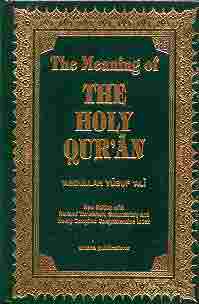
"5889. Great News: usually understood to mean the News or Message of the Resurrection.”
Abdullah Yusuf Ali, The Holy Qur'n, Amana Corporation, 1989.